iPhone Fold Rumors: Release Date, Design, Cameras, Pricing, and More
- Apple is finally lining up a foldable iPhone for around 2026–2027, new reports say.
- The iPhone Fold is rumored to be an iPhone on the outside and a near–iPad mini on the inside, with a 7.7–7.8-inch inner display.
- Under the hood, leaks point to an A20 Pro chip, 12GB RAM, a C2 modem, and a price that starts somewhere around $2,000. Read on...
If you’ve been following Apple rumors for more than five minutes, the “foldable iPhone” almost feels like an urban legend. It shows up, disappears, comes back with different specs, gets delayed, then somehow looks even more ambitious.
Now, though, the noise is much harder to ignore. Multiple analysts and leakers say Apple is finally lining things up for a foldable iPhone in 2026, most likely as part of the broader iPhone 18 family. Some still insist 2027. Either way, it’s no longer a wild idea—it’s a product Apple’s supply chain is actively preparing for.
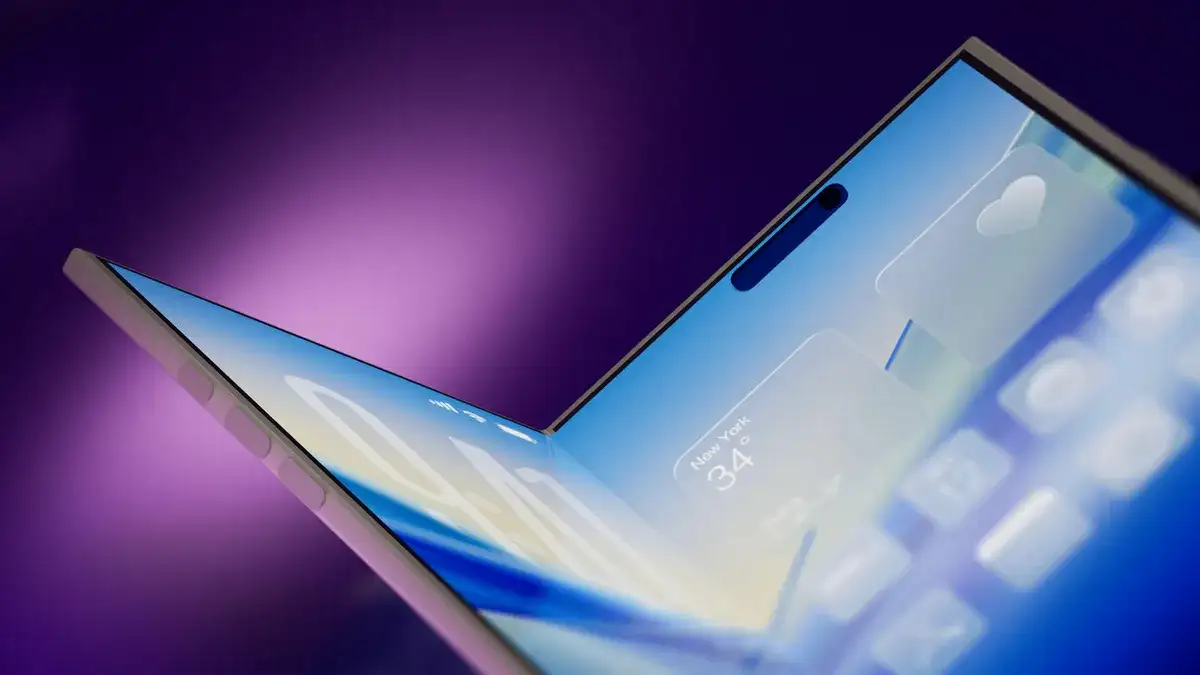 Photo via CNET // A concept rendering of Apple's upcoming 2026-2027 Foldable iPhone.
People are already calling it iPhone Fold, though the more formal name floating around is “iPhone 18 Fold.” Let’s stick with iPhone Fold for now—because that’s the one everyone’s imagining in their heads.
Why Apple is waiting
Samsung, Huawei, Motorola, Oppo, and a bunch of Chinese brands have been shipping foldables for years. Samsung’s Galaxy Z Fold and Z Flip are on generation 7 already. Huawei is out there experimenting with weirdly wide flip phones and even trifold devices that open into mini-tablets.
So why is Apple sitting this out... for now?
Part of it is just Apple being Apple.
New categories usually go like this:
- Watch rivals ship early, a bit messy.
- Study how real people use them.
- Spend an absurd amount of time on hinges, glass, and software.
- Ship a version that feels boring on paper but suspiciously polished in real life.
With foldables, the stakes are higher. You’re bending an OLED panel thousands of times across a fragile hinge and asking people to pay MacBook money for the privilege. If the crease looks ugly or the hinge fails early, that’s not a small “oops”—that’s a support nightmare.
Apple has been quietly preparing for this for over a decade, filing patents on flexible displays, special hinge designs, flexible batteries, “self-healing” coatings, and more.
So yes, the company is late. But it’s late because it wants a foldable that performs like an iPhone, not like a tech demo.
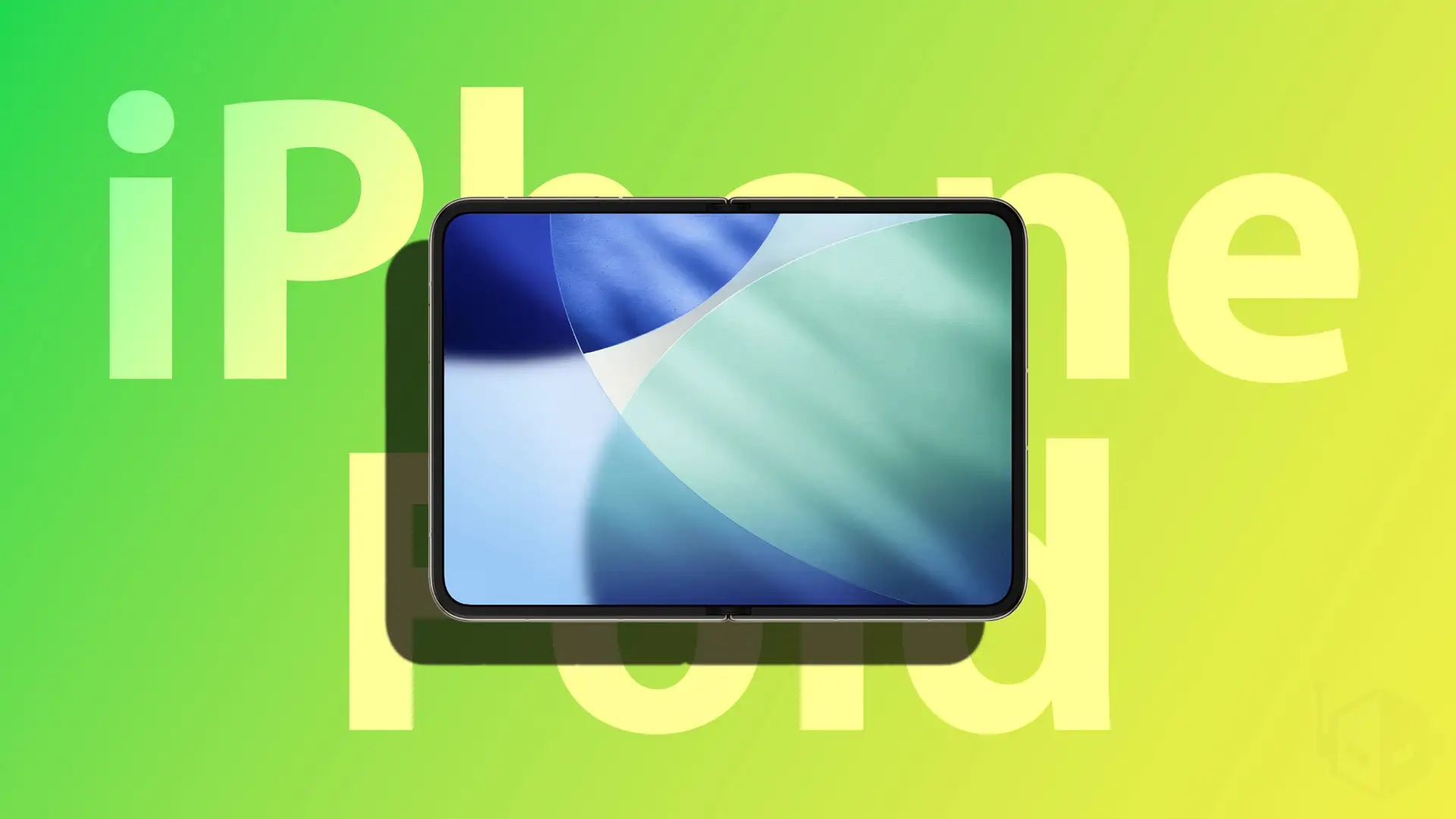 Photo via WCCF // Apple's iPhone Fold, a 3D rendering concept
Release Date
This is where the rumor timeline gets messy, but the current picture is much clearer than it used to be.
Earlier guesses had the foldable arriving in 2023, 2024, then 2025. That obviously didn’t happen. Over time, most serious analysts drifted towards a 2026–2027 window, depending on how quickly Apple can lock the hinge and display design.
Right now, the most compelling thread is this:
- Apple is expected to launch iPhone 18 Air, Pro, Pro Max, and Fold in September 2026. The cheaper iPhone 18 and 18e would follow in 2027.
- Analyst Jeff Pu has doubled down on that September 2026 timeframe and says progress on both iPhone Fold and iPhone Air 2 is still on track, despite separate reports hinting at possible delays.
- Other reports still mention 2027 as a fallback if hinge issues take longer to solve or if Apple wants more time for software.
If you zoom out, the pattern is pretty simple: it seems like the baseline expectation is September 2026, with the backup plan date being 2027 if anything slips.
So if you’re hanging on to an iPhone 14 or 15 waiting for the foldable, you’re probably looking at one more regular upgrade cycle before that big leap.
 Photo via NotebookCheck // Will Apple's upcoming iPhone be called iPhone 18 Fold? Or just iPhone Fold? Rumors are split.
An iPhone that unfolds into an iPad mini
The broad consensus is that the iPhone Fold will be a book-style device: a “normal” outer screen for quick stuff and a much larger inner screen that opens up like a mini iPad.
Recent rumors paint a surprisingly consistent picture:
- Around 5.3–5.5 inches for the outer display—small enough to feel like a classic iPhone, big enough to be usable on its own.
- Around 7.7–7.8 inches for the inner display—basically iPad mini territory when fully unfolded.
AppleInsider and other sources outline inner display resolutions around 2713 × 1920 and an outer panel around 2088 × 1422, which works out to pixel densities in the same ballpark as current iPhones.
That matters for a simple reason: Apple doesn’t want the Fold to feel like a weird off-brand screen. It wants it to feel like… an iPhone when closed, and like a small iPad when open.
A crease-free display (or close to it)
The crease is the villain of every foldable. You can pretend it’s not there, but under certain angles or in bright sunlight, it’s always staring back at you.
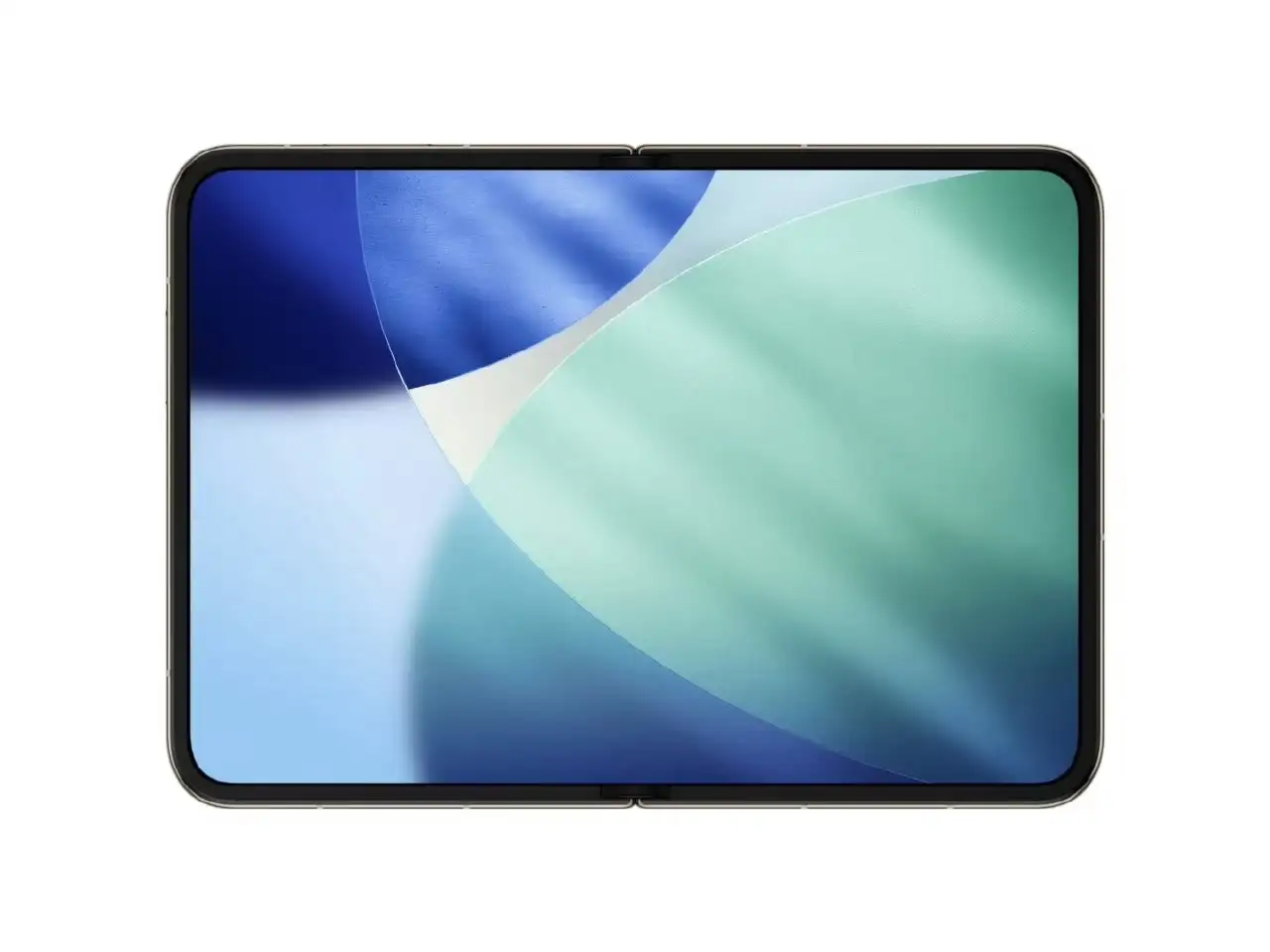 Photo via TweakTown // A book-style Foldable iPhone concept with a crease-free display. Expected release is 2026-2027.
Apple seems almost obsessively focused on this. Reports say:
- Samsung Display will be Apple’s main panel supplier for the iPhone Fold.
- Apple will use a “crease-free” design from Samsung, combined with metal plates and hybrid OLED panels to control stress as the screen bends.
There’s also a more subtle piece of the story: Apple supposedly moved from on-cell touch sensors to in-cell tech for the foldable, because on-cell panels can form tiny air gaps that make creases more obvious over time. In-cell screens tuck the sensor layer deeper inside the display sandwich, bringing it closer to the tech used on existing iPhones.
In plain language? Apple is trying to make the crease something you only notice when you go looking for it.
A decade of experiments
If the display is the star, the hinge is the hidden hero. It has to support the screen, manage stress, keep dust out, and still feel smooth after thousands of folds.
Apple’s been sketching, simulating, and patenting hinge ideas since at least 2014:
- Early patents pointed to Liquidmetal, an amorphous alloy that’s strong, springy, and very resistant to wear, as a candidate for the hinge.
- Later filings described complex hinge mechanisms designed to distribute pressure across the most fragile part of the display, and even ideas for self-healing coatings.
Analyst Ming-Chi Kuo now expects Apple to use Liquidmetal for the hinge in the final product, with unit costs around $70–$80 per hinge in mass production—quite a lot for one component. Foxconn and Shin Zu Shing are reportedly lined up as main hinge suppliers, with Luxshare waiting in the wings.
All that engineering effort has one goal: make the hinge disappear from your mind. You fold the device, it feels solid, it doesn’t snap, crunch, or wobble, and you get on with your life.
Design
If you’re trying to picture the iPhone Fold in your hand, the best mental image right now is this: Two iPhone Airs side by side, sharing one ultra-thin hinge.
Kuo and other leakers expect a folded thickness of around 9–9.5mm, and 4.5–4.8mm when opened. That would actually make the unfolded Fold thinner than the already-thin iPhone Air, which is kind of wild for a dual-screen device.
Design rumors point to:
- A look similar to the iPhone Air, with flat sides and very slim profiles.
- An outer display that works as a regular iPhone—no weird tall aspect ratio that feels cramped.
- eSIM-only, with no physical SIM slot, continuing Apple’s slow move away from SIM trays in premium models.
Material-wise, things get more interesting. Some reports mention a hybrid frame with titanium and aluminum, mixing strength and lower weight, which also lines up with leaks about future Pro and Air devices.
Color rumors are fairly safe for now—early testing is said to include black and white, with more playful colors probably saved for later generations once the core engineering is locked in.
Under the hood
You can’t ship a halo product like this with mid-tier silicon. The foldable iPhone is expected to be the tech showpiece of the iPhone 18 lineup, so the specs are suitably bold:
- A20 Pro chip, built on TSMC’s 2-nm process, for higher efficiency and better performance than current 3-nm chips.
- 12GB of RAM, which finally pushes a mainstream iPhone into proper high-memory territory, useful for multitasking on that big inner display.
- Apple’s C2 5G modem, the second-generation in-house modem after C1, designed to get closer to Qualcomm’s performance while giving Apple tighter control over power, thermals, and features.
On the power front, foldables are notoriously hard to get right. Two screens, heavy multitasking, constant folding—it all eats battery. One rumor mentions a ~5000mAh “3D stacked” cell, though that specific leak is considered shaky. More solid are reports that Apple has spent a lot of energy on more efficient display driver ICs, moving from a 28-nm to a 16-nm process to squeeze out extra battery life.
Touch ID on the side button makes a comeback
Here’s a fun twist: no Face ID—at least not on the first Fold, according to several reports.
Instead, Apple is expected to reuse its side-button Touch ID approach from the iPad Air and iPad mini. You press the power button to wake the phone, and your fingerprint unlocks it.
On a foldable, that actually makes sense:
- The phone might be closed, half-open, or fully open.
- Cameras and sensors could be in odd places.
- A side fingerprint reader just works in every posture.
It’s not as flashy as Face ID, but it’s reliable and already proven in other Apple devices.
Cameras
Camera rumors for the iPhone Fold are a bit less settled, but a rough picture is emerging.
Most sources agree on:
- Two rear cameras—a main wide and an ultra-wide—both using 48MP sensors similar to what Apple introduced on the iPhone 15 series.
- One front camera when unfolded, hidden under the inner display, similar to what we’ve seen on some competing foldables.
- A punch-hole selfie camera on the outer screen, for standard front-facing photos and FaceTime when the device is closed.
Where things diverge is the resolution of those selfie cameras:
- Jeff Pu mentions a more modest 18MP sensor for both folded and unfolded modes.
- A separate take from JPMorgan, echoed by other leakers, suggests Apple could go big with a 24MP under-display selfie camera, which would be a first in the industry.
Either way, the message is clear: the Fold isn’t supposed to be the “camera monster” of the lineup—that’s still the Pro Max—but it won’t be a compromise either.
Pricing
Short answer: a lot.
Most pricing rumors cluster around $2,000–$2,500 in the US, making it more expensive than any current iPhone—and even pricier than some Macs.
That puts it above Samsung’s Galaxy Z Fold prices and into serious laptop territory. But this lines up with how Apple usually treats first-gen halo devices:
- Vision Pro launched at a price that made regular consumers gulp.
- The first Apple Watch Edition cost more than some Rolexes.
The Fold looks like it’ll play a similar role: a technology showcase that also happens to be a real product.
Despite the high price, Apple reportedly expects a big upgrade cycle in 2026, with a 10% overall bump in iPhone sales once the Fold and Air 2 hit the market. Shipment estimates for the foldable land somewhere between 3–5 million units in 2026, and up to 20 million units across the first two generations.
This isn’t meant to replace the regular iPhone. It’s meant to sit above it.
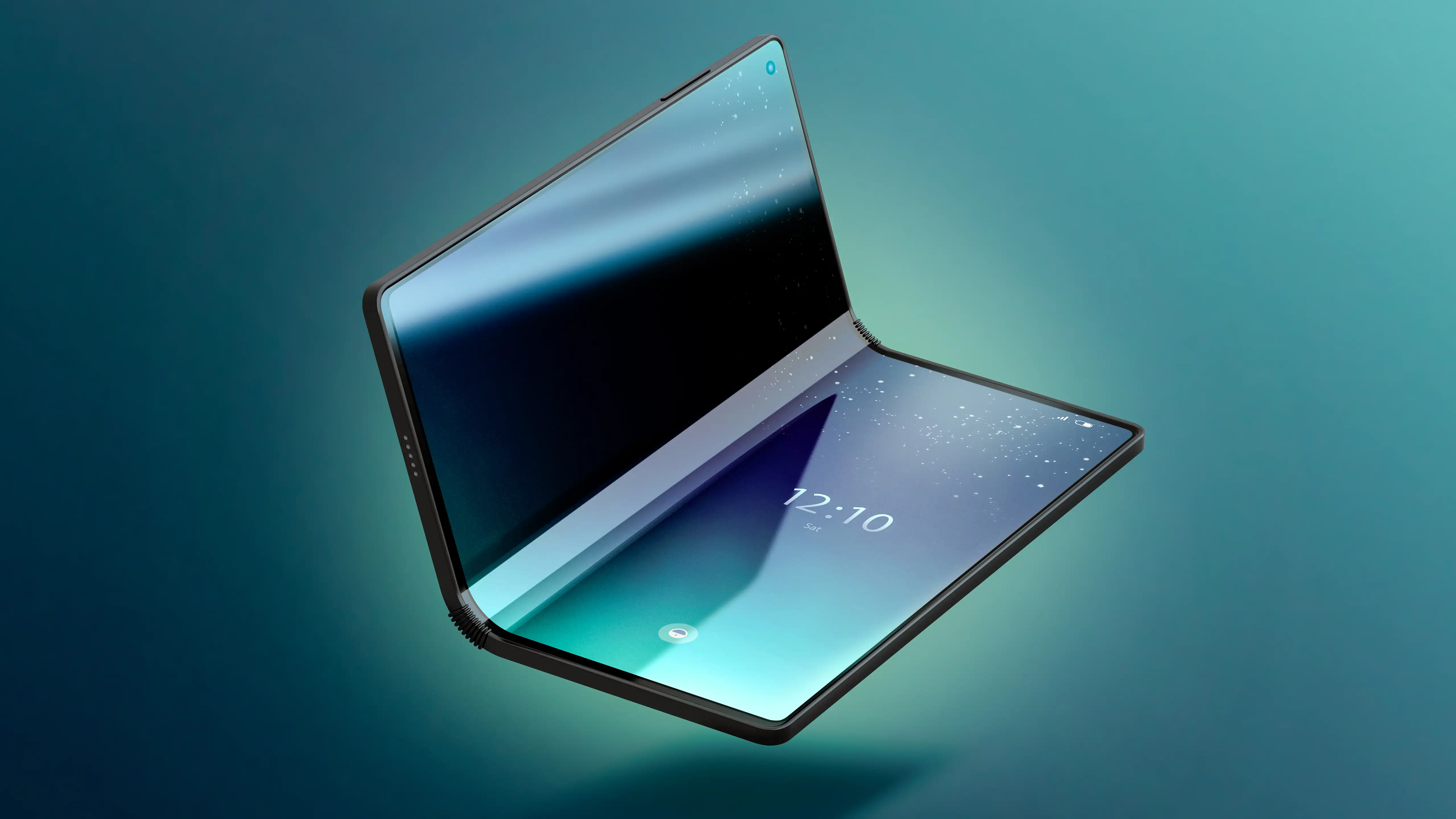 Photo via BGR // Another concept of Apple's iPhone 18 Fold.
Should you wait?
This is the big practical question for Apple fans.
If any of these sound like you:
- You’re excited by new form factors and like being early on big platform shifts.
- You already use an iPad mini as a “couch computer” and wish it was always with you.
- You care more about multitasking and media than about having the absolute best camera system…
…then the iPhone Fold is exactly the kind of product you’ll want to watch closely.
But there are trade-offs:
- The first generation will be expensive, and there’s always a chance Apple makes big changes on gen two once it sees how people really use it.
- Foldables are still more complex than slabs. Even with Apple’s hinge and crease work, it’s a more delicate class of device.
- If you just want a reliable daily iPhone with the best possible camera and long battery life, the regular iPhone 18 Pro / Pro Max might still be the smarter buy.
A decent rule of thumb:
If you upgrade every 2–3 years and love tech experiments, waiting for Fold makes sense.
If you prefer to hold a phone for 4–5 years, you might want to let the first Fold generation come and go, then reassess.
My take
Will it ship exactly as the rumors say? Probably not. Apple will tweak, delay, cancel some ideas, and surprise us somewhere. But the direction is clear: the iPhone line is heading towards a fork, where “Fold” sits as the experimental, ultra-premium branch.
And when September 2026 rolls around—if the current predictions hold—you’ll finally get to decide whether you’re ready to fold your iPhone, or if you’re happy keeping it flat a little longer.
Recommended by the editors:
- No More September iPhones? Apple's Strategy Shift Changes Everything
- MacBook Pro M6 OLED Rumors: Release Date, Price, Features, and More
- 2026’s Top 250+ Wallpapers: The Ultimate Collection for iPhone, Android & More
- iPhone 18 Rumors: Apple Reportedly Testing Under Display Face ID
- Intel Could Finally Return to Apple Computers in 2027
Published to Apple Scoop on 14th November, 2025.