Apple’s Foldable iPhone Might Be Cheaper Than Anyone Thought
- Price rumors related to the Foldable iPhone are shifting, and this time it’s not just wishful thinking.
- Picture a book-style fold that’s thin like the iPhone Air, but with internals built for real, daily use.
- If these rumors stick the landing, the upgrade wave could be the biggest since iPhone X.
Ever since iPhone 17 launched in September, we've been navigating an absolute avalanche of rumors related to the upcoming 2026 foldable iPhone. If the chatter holds, 2026 is shaping up to be a real pivot for the iPhone—foldable, ambitious, and, yes, expensive, but not absurd for what it’s trying to be.
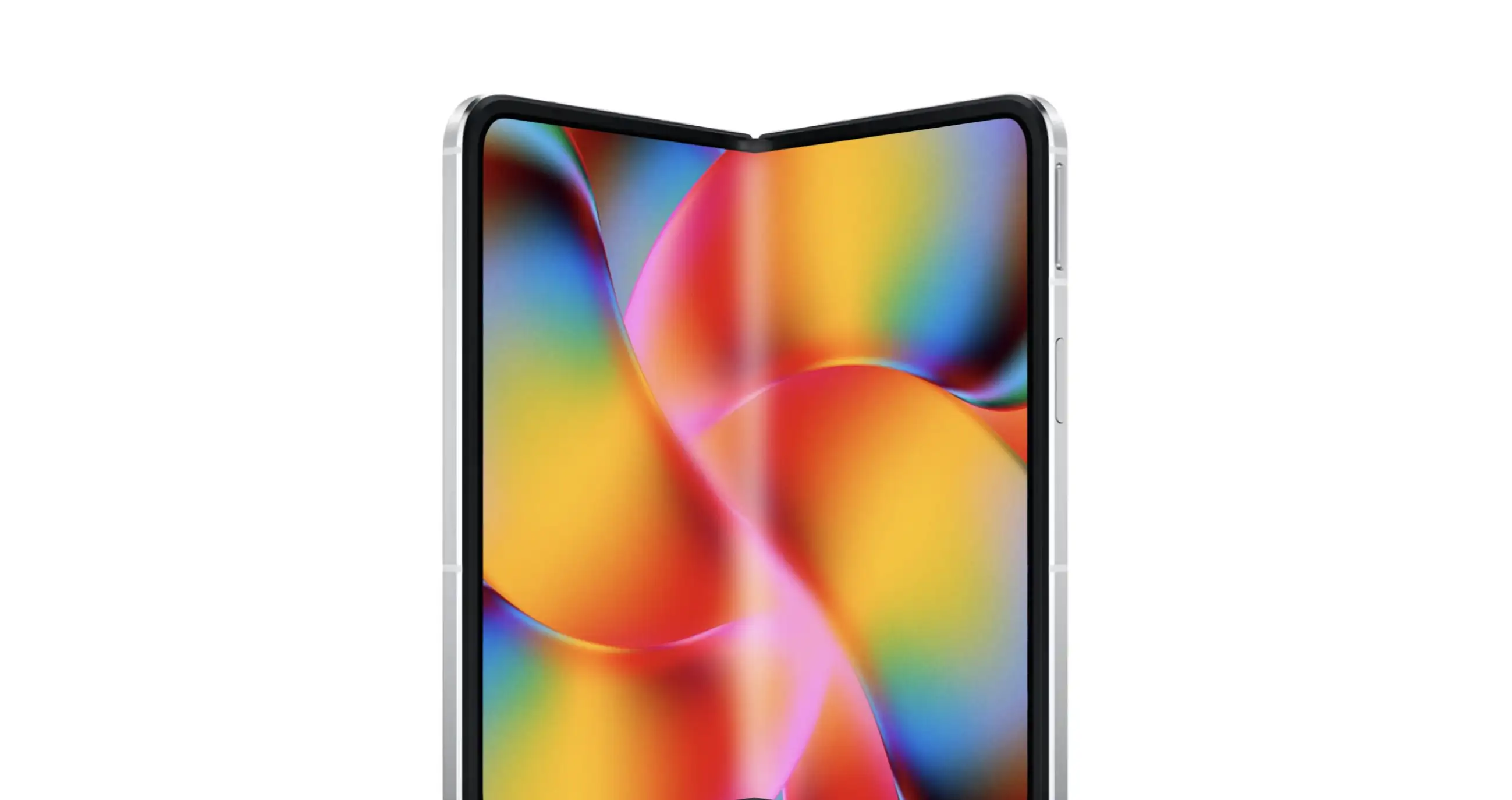 Photo via Apple Hub // A 3D concept rendering of what Apple's Foldable iPhone might look like, based on recent rumors and reports.
Price first, because that’s what everyone asks
Apple sells premium gear at premium prices. That’s not cynical; it’s the model. Early expectations put a foldable iPhone between $2,000 and $2,500—roughly in the neighborhood of Samsung’s Galaxy Z Fold line. But there’s a twist worth watching: the hinge.
Multiple supply-chain notes suggest Apple’s hinge cost target has slid from an early ~$100–$120 range down to roughly $70–$80 after mass production ramps. That’s not small change on a part this critical. Lower part costs don’t automatically mean a cheap phone—this is Apple—but they do give the company room to keep the sticker in the same ballpark as rivals, protect margins, or shave the price enough to make the decision easier for people on the fence.
If Apple wants this thing in hands—not just on TikTok flex videos—that flexibility matters.
“Late” isn’t a weakness if you land the experience
Samsung’s been at this for years. Google’s in the mix too. On paper, Apple’s the one chasing. In practice, we’ve seen this movie before. The iPod wasn’t first. The iPhone wasn’t first. What Apple tends to bring is a cleaner, calmer user experience that makes the category feel finished.
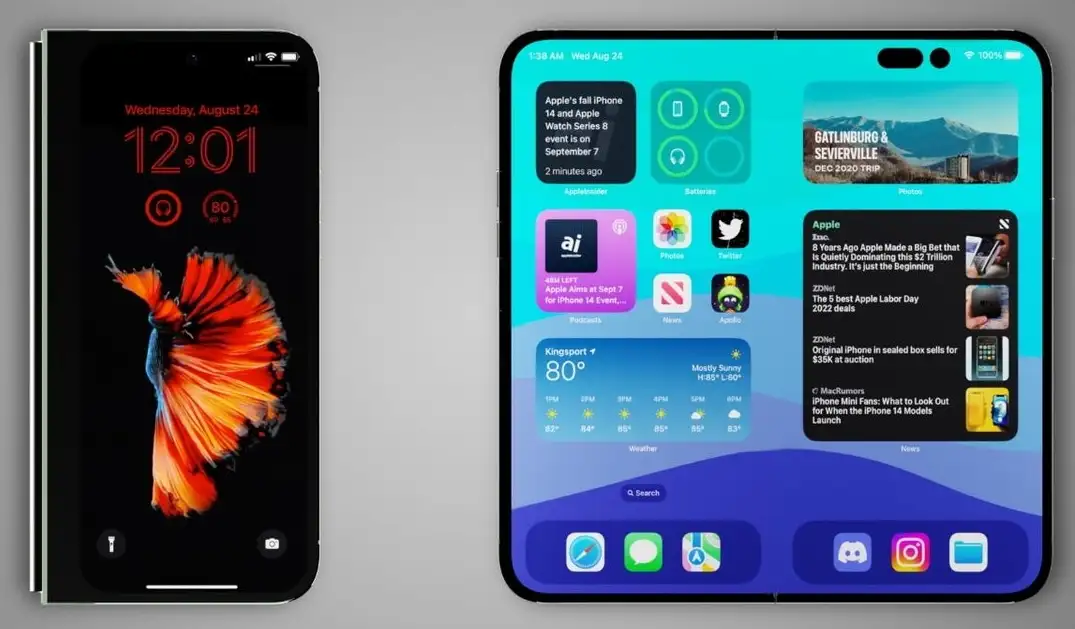 Photo via PhoneArena // Apple's iPhone Fold: A realistic 3D concept.
That bar is higher with foldables because the pain points are obvious to anyone who’s even glanced at a folding screen.
The crease: the problem everyone sees
Displays bend; materials protest. Most foldables crease right where the action happens. Rumor mill time: Apple has reportedly been working with suppliers on a tightly integrated metal plate beneath the display to spread the stress of each open and close. Think of it like a snowshoe for bending forces—wider footprint, less pressure per point.
Add to that a laser-drilled microstructure process (tiny patterns guiding how the material flexes), and you get a panel that’s harder to crease and kinder to the eye. If that holds up in real life, it’s the difference between “neat tech demo” and “I forget it’s folding.”
Form factor: more Fold than Flip
Expect a horizontal book-style design—closer to a Galaxy Z Fold than a Flip. Talk around the supply chain pegs the outer display around 5.5 inches, opening to roughly 7.6–7.8 inches. There’s also a rumor about a silhouette that feels like two iPhone Airs hinged together. And here’s the eyebrow-raiser: a target thickness around 4.5 mm when open. For context, iPhone Air is 5.6 mm and already absurdly thin.
“Thin” only works if it isn’t fragile. Apple’s recent thin designs have been stronger than they look—the iPhone Air’s center-bend tolerance was a quiet flex. If the foldable inherits that stiffness, nobody will miss the extra millimeter.
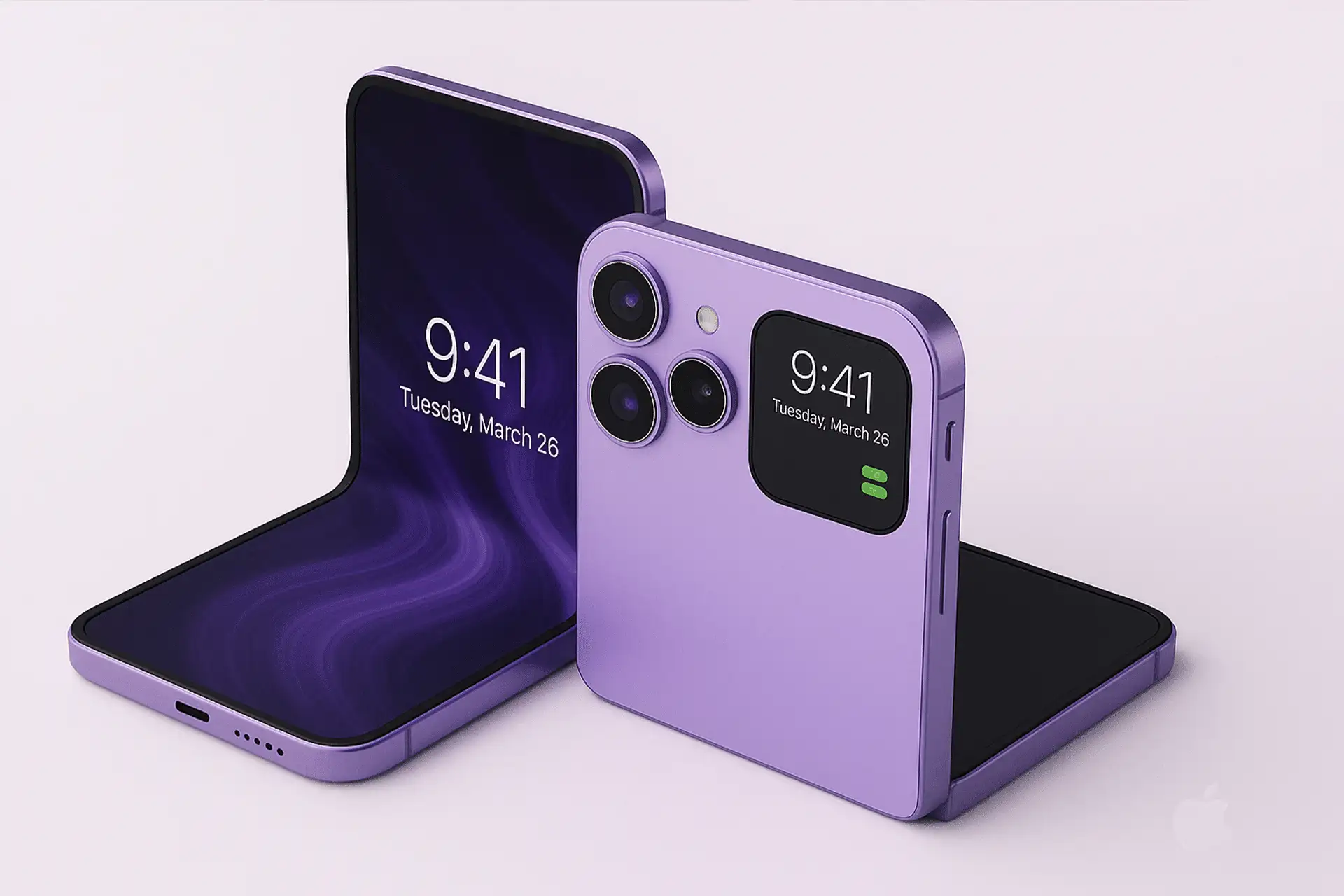 Photo via Apple Magazine // Don't hold your breath for a flip-style foldable from Apple, rumors say.
Touch ID over Face ID? Surprisingly sensible
Face ID inside and out would require two full sensor stacks. A side-mounted Touch ID button just works—open or closed, desk or pocket, portrait or landscape. It’s not a step back; it’s the right call for a device with two personalities.
The rumored spec sheet that actually matters
- Outer display ~5.5", inner display ~7.6–7.8"
- Dual 48 MP rear cameras, plus an inner camera
- 12 GB RAM, 256 GB base storage (finally sensible for this class)
- Titanium or aluminum-titanium frame for strength without heft
- New hinge designed for lower cost and higher durability
Specs don’t tell the whole story, but they do hint at how the phone wants to be used: a pocketable slab that opens into a real workspace—notes on one side, video on the other, or a keyboard that doesn’t feel cramped.
The hinge supply story is bigger than it sounds
Foxconn and Shin Zu Shing reportedly teamed up on the hinge, with Amphenol handling the rest. That split—roughly two-thirds vs. one-third—suggests Apple is corralling quality around a small circle of partners while still keeping a competitive counterweight. More important: the cost drop seems to come from smarter manufacturing and design, not bargain-basement materials. Better yields, tighter tolerances, fewer headaches.
That’s the kind of behind-the-scenes decision that determines whether a new category hits scale or stalls.
Timing, momentum, and the upgrade cycle
If mass production kicks off mid-2026, a September window lines up with the classic iPhone cadence. The last truly radical iPhone was 2017’s iPhone X. It sparked a huge refresh wave because it changed the feel of the phone—edge-to-edge display, gestures, a new language for everyday use.
An Apple book-style foldable that solves the crease, stays thin, and doesn’t price itself into museum-piece status can do the same. Some analysts are already floating a 2026 unit bump over 2025. That’s conservative if this lands right, and admittedly rosy if it misses. Still, you can feel the stakes: this isn’t a side project like Vision Pro was at launch; this is the flagship.
So… is 2026 the year it finally feels new again?
Honestly, it might be. The recipe looks familiar—Apple arrives after the market warms up, fixes the parts that keep regular people from loving the thing, and prices it where early adopters and curious upgraders actually say yes.
Will there be trade-offs? Of course. Battery life vs. thinness. Price vs. scale. But if the crease is tamed, the hinge holds, and the software treats the larger canvas like a first-class citizen, the conversation around “incremental” could end the moment people open it and forget the seam.
And that’s the moment Apple cares about—the second the tech disappears and the experience takes over.
Recommended by the editors:
- No More September iPhones? Apple's Strategy Shift Changes Everything
- MacBook Pro M6 OLED Rumors: Release Date, Price, Features, and More
- iPhone 18 Rumors: Apple Reportedly Testing Under Display Face ID
- Intel Could Finally Return to Apple Computers in 2027
- Foldable iPhone Could Be Apple’s Most Expensive Phone Ever At $2,399
Published to Apple Scoop on 13th October, 2025.