Apple iPhone Air: Release Date, Features, Pricing, and More
- Thinner than your wallet, sturdier than you’d guess.
- A front-camera twist makes landscape selfies weirdly easy.
- Pre-orders hit this week—yes, it’s happening fast.
Announced today, Apple's iPhone Air is the thinnest iPhone to date at 5.6mm (0.22 inches), built around a grade-5 titanium frame and a redesigned interior that makes room for a bigger battery while keeping weight down. It starts at $999 USD, with pre-orders on Friday, September 12 and availability on Friday, September 19.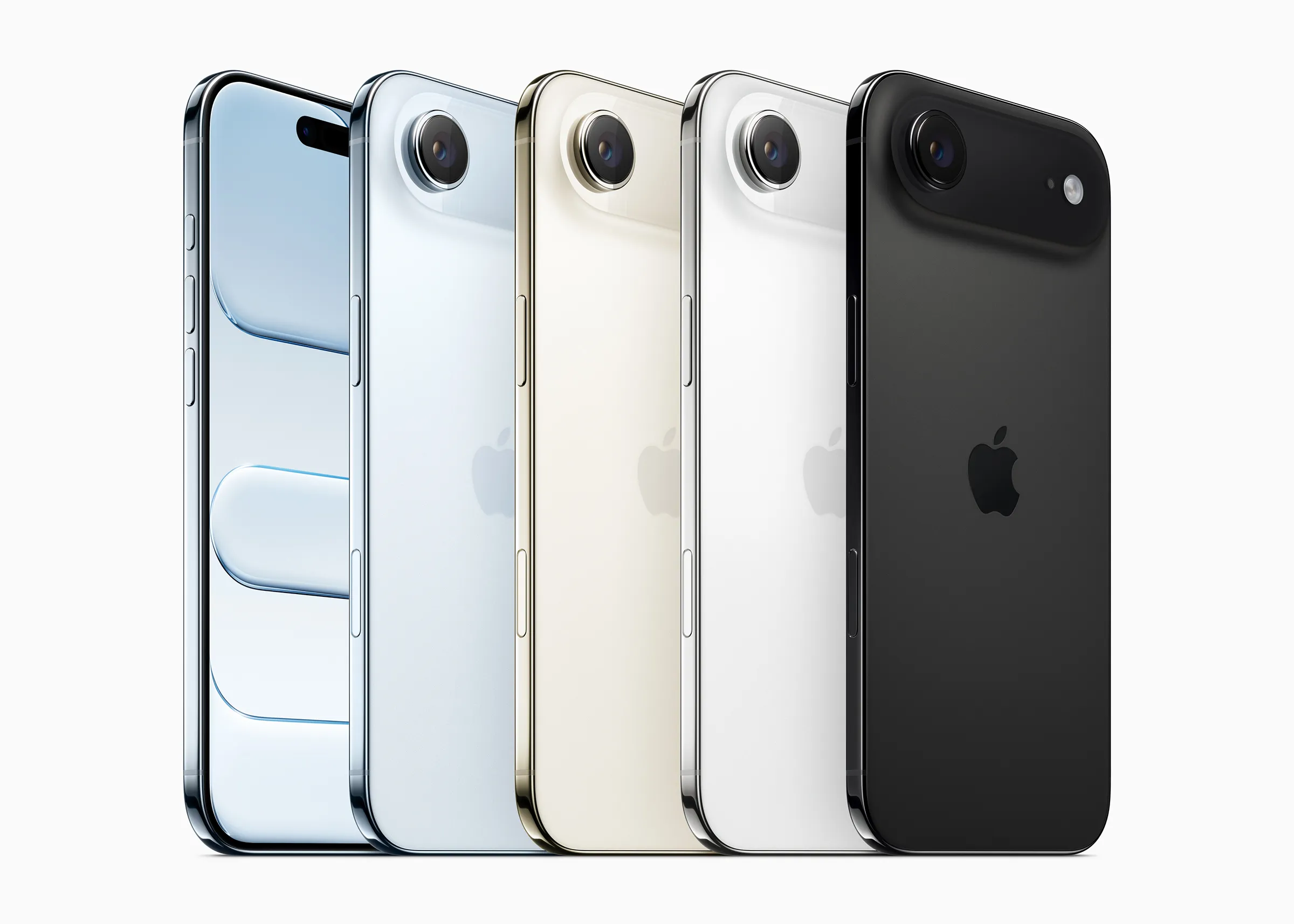 Photo via Apple // Apple's iPhone Air is finally here. And yep, it's super thin.
The all-new iPhone Air is so powerful, yet impossibly thin and light, that you really have to hold it to believe it’s real. This huge leap in design and engineering is only made possible through Apple innovation, especially Apple silicon.— John Ternus, Apple SVP of Hardware Engineering
Design and durability
iPhone Air pairs that titanium frame with a precision-milled “plateau” back that houses the cameras, speaker, and Apple silicon, freeing up internal volume for the battery. The front gets Ceramic Shield 2 with 3× better scratch resistance and improved anti-reflection; the back is also protected by Ceramic Shield for the first time, which Apple says delivers 4× better crack resistance than previous back glass. Apple adds that Air exceeds its bend strength requirements. There’s an Action button for quick tools and Camera Control to jump into shooting or trigger Apple’s visual intelligence features.
Display and outdoor visibility
The phone uses a 6.5-inch Super Retina XDR panel with ProMotion up to 120Hz for smooth scrolling and gameplay, and it can drop to 1Hz when idle for the Always-On display. Peak outdoor brightness hits 3000 nits, and Apple claims 2× better outdoor contrast, which should make midday reading far less squinty.
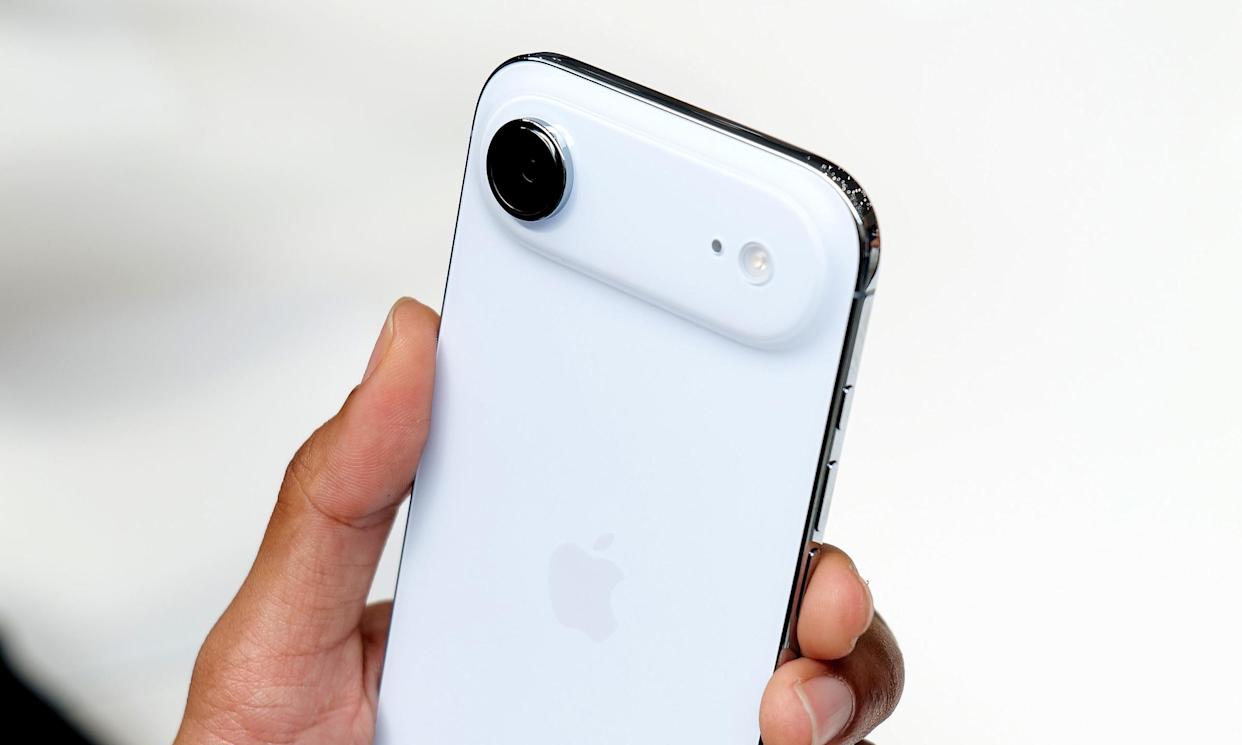 Photo via Apple // The iPhone Air's build quality is seriously impressive. Apple is likely trying to avoid another 'Bendgate' disaster.
Cameras (front and back)
On the rear, a 48MP Fusion main camera delivers in-sensor options that mimic 28mm and 35mm focal lengths, plus an optical-quality 2× Telephoto. The large 2.0µm quad-pixel sensor with sensor-shift OIS is tuned for low light, while an updated Photonic Engine aims for more lifelike detail and color.
Up front, Apple introduces an 18MP “Center Stage” camera with a square sensor and a wider field of view. The clever bit: you can take landscape selfies while holding the phone vertically. For group shots, Center Stage can auto-expand the field of view and rotate framing to fit everyone in. Video features extend across the system—4K60 Dolby Vision, Action mode, Spatial Audio, Audio Mix for voice boosting after capture, and wind noise reduction are all on the menu.
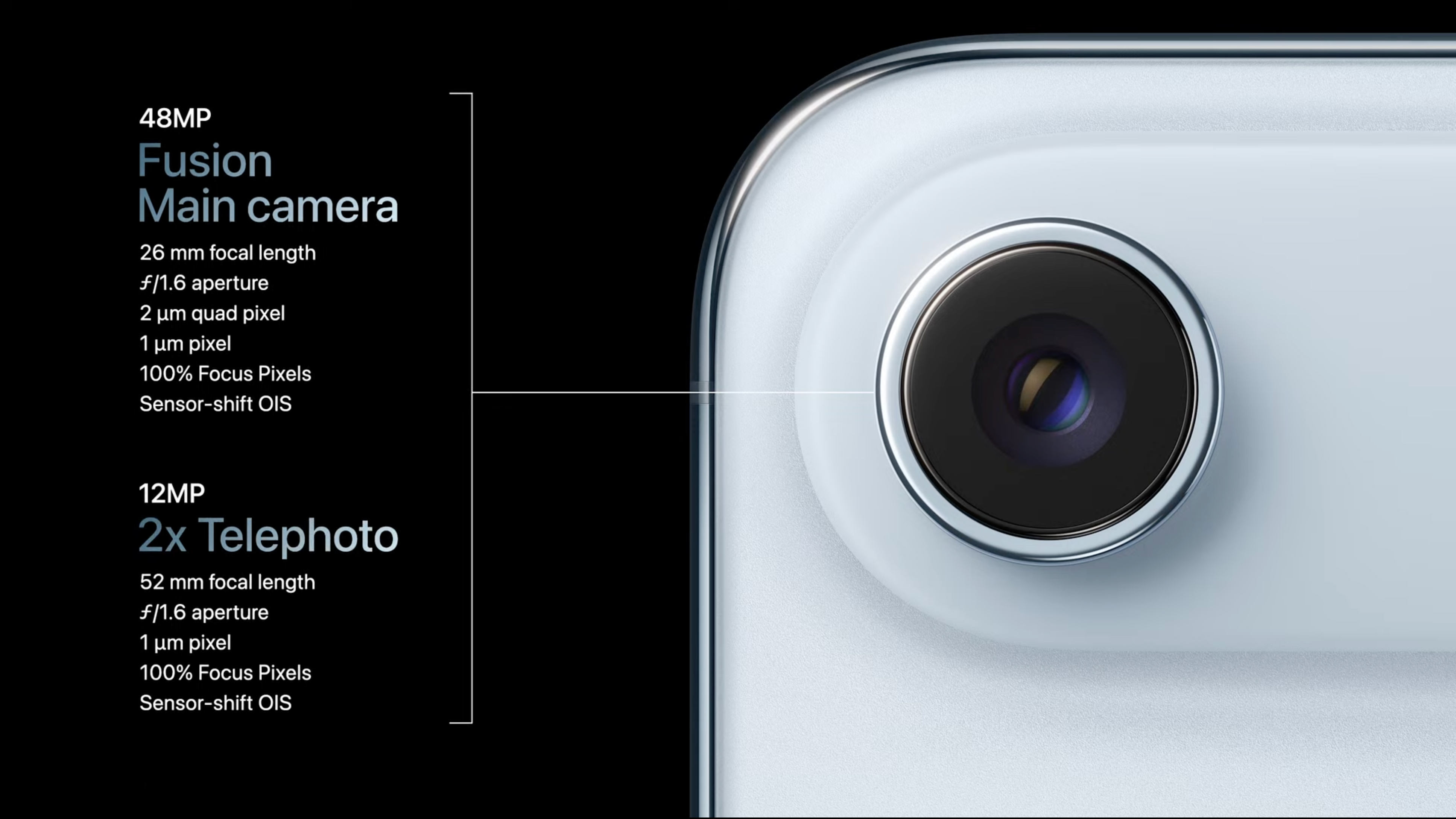 Photo via Apple // The iPhone Air has a gorgeous new camera design. But will pro users be impressed by it?
Silicon and connectivity
Under the glass, A19 Pro brings a 6-core CPU for day-to-day speed and a 5-core GPU with Neural Accelerators in each GPU core. Apple’s claim is up to 3× peak GPU compute over the prior generation, aimed at on-device generative AI and modern AAA-style mobile games.
Two new radios round it out. N1 enables Wi-Fi 7, Bluetooth 6, and Thread, while improving Personal Hotspot and AirDrop reliability. The C1X modem is Apple-designed as well, up to 2× faster than C1, faster than the modem in iPhone 16 Pro for the same cellular tech, and 30% more power-efficient overall, according to Apple.
Battery, eSIM, and software touches
Between the tighter internal layout, Apple silicon, and software tuning, Apple’s claim is simple: “fantastic all-day battery life.” A new Adaptive Power Mode in iOS 26 learns your habits and trims power if it predicts you’ll run low before day’s end. This model is eSIM-only, which helps the thin profile and brings some perks: easier travel setup, better security (nothing to yank if the phone is stolen), and broad support—500+ carriers worldwide and 200+ local prepaid options for trips. iOS 26 also streamlines adding and managing multiple eSIMs. And yes, the color story is classic Apple: space black, cloud white, light gold, sky blue.
Early take
There’s real ambition here. A phone this thin usually comes with obvious trade-offs; Apple’s betting the A19 Pro + N1 + C1X trio, the Ceramic Shield sandwich, and some smart power management erase most of them. The landscape-while-vertical front camera trick feels like one of those small, daily quality-of-life upgrades that quietly wins people over. If you care about pocket feel and build quality—and want modern camera flexibility without going full “Pro”—iPhone Air looks like the sweet spot.
Recommended by the editors:
- Apple M5 Explained: Everything You Need to Know
- M5 MacBook Pro (2025): Release Date, Specs, Pricing, Preorder, and More
- Apple M5 MacBook Pro, iPad Pro & Vision Pro: Specs, Price, Release Date
- 10 Hidden Features You Need To Know: iPhone Air, iPhone 17, 17 Pro, 17 Pro Max
- iPhone 17 Pre-Orders Open This Week: Dates, Prices, and Everything to Know
Published to Apple Scoop on 9th September, 2025.